Microsoft Outlook Add-in

The LogicalDOC Microsoft Outlook Add-in integrates LogicalDOC directly into Microsoft Outlook, allowing you to manage emails and documents without leaving your familiar email environment.

With the add-in, you can archive email messages and their attachments directly into the LogicalDOC repository, selecting the appropriate destination folder. Relevant email information and metadata are preserved together with the archived content, making business correspondence easier to organize, search, and retrieve.

The integration also works in the opposite direction: while composing an email in Outlook, you can browse the LogicalDOC repository and attach documents stored in the system directly to your outgoing message.

By connecting email management with the LogicalDOC document repository, the Outlook Add-in helps centralize business correspondence and related documents, reducing manual operations and keeping important information organized and accessible.

LogicalDOC Microsoft Outlook Add-in

Pre-requisites

The LogicalDOC Outlook Add-in requires Classic Microsoft Outlook for Windows. It supports Microsoft Outlook from Office 2016 through Office 2021, as well as the classic Outlook desktop application included with Microsoft 365.

Note: The LogicalDOC Outlook Add-in is designed for the classic desktop version of Microsoft Outlook for Windows and is not compatible with the new Outlook for Windows.

You have to install on your Windows PC the latest version of the LogicalDOC Outlook Add-in compatible with your LogicalDOC installation. The installer is available on the LogicalDOC download website.

Open a Document

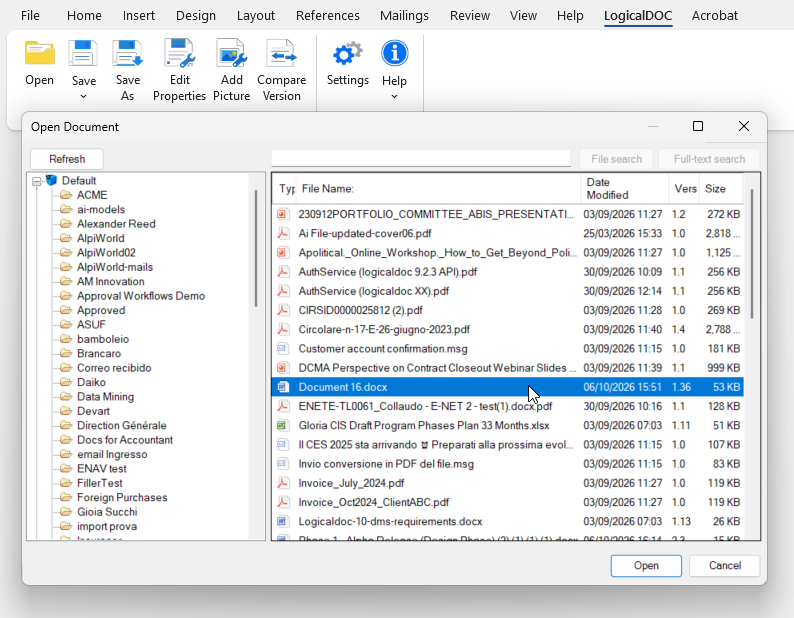
Click the Open button in the LogicalDOC ribbon to open the document browser. From this window, you can browse the LogicalDOC folder tree and view the documents contained in the selected folder.

The document list provides useful information such as the file name, last modification date, version and file size, making it easy to identify the document you want to work with.

LogicalDOC Office Add-in document browser

To locate a document more quickly, use the search field at the top of the window. You can search for files without manually browsing through the folder structure.

Select the desired document and click Open. The document will be opened in the current Microsoft Office application, where you can view or edit its contents.

When working with a document stored in LogicalDOC, the Office Add-in manages the communication with the document repository, allowing the document to be edited in Microsoft Office and subsequently saved back to LogicalDOC.

Configure Outlook Add-in

After installing the LogicalDOC Outlook Add-in, open Microsoft Outlook. A new LogicalDOC menu will be available in the Outlook interface. Open the menu and select Configuration to configure the connection to your LogicalDOC instance and the default options used when archiving emails.

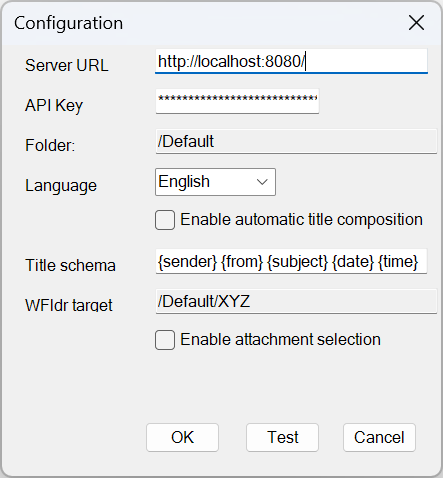
LogicalDOC Outlook Add-in configuration

In the configuration window, you can specify the following options:

  • Server URL: the URL of your LogicalDOC installation, for example https://documents.example.com.
  • API Key: the API key used by the Outlook Add-in to authenticate with LogicalDOC. If you do not have an API key yet, follow the instructions in API Keys to create and activate a new one.
  • Folder: the default LogicalDOC folder where emails and attachments will be stored.
  • Language: the language used by the Outlook Add-in.
  • Enable automatic title composition: when enabled, the title of the document created from an email is automatically generated according to the Title schema defined below.
  • Title schema: defines how the title of an archived email is automatically composed. You can combine fixed text with the following placeholders:
    • {sender} - sender display name;
    • {from} - sender email address;
    • {subject} - email subject;
    • {date} - email date;
    • {time} - email time.
  • WFldr target: defines the LogicalDOC target folder associated with the Outlook watched folder. When an email is copied or moved to the LogicalDOC watched folder in Outlook, the message is automatically archived in LogicalDOC as a .msg file.
  • Enable attachment selection: when enabled, the add-in allows you to select which email attachments should be saved in LogicalDOC.

For example, the following title schema:

{sender} {from} {subject} {date} {time}

generates the document title by combining the sender display name, sender email address, message subject, date, and time.

Click Test to verify that the Server URL and API Key allow the Outlook Add-in to connect successfully to LogicalDOC.

Click OK to save the configuration. These settings are stored locally and normally need to be configured only once. You can reopen the configuration window at any time to modify them.

Import Emails and Attachments

The LogicalDOC Outlook Add-in allows you to archive selected email messages, their attachments, or both directly into the LogicalDOC repository.

Select one or more messages in Outlook and open the LogicalDOC tab. The Save section provides two commands: Emails and Attachments.
LogicalDOC Outlook Add-in - save emails and attachments

Save Emails

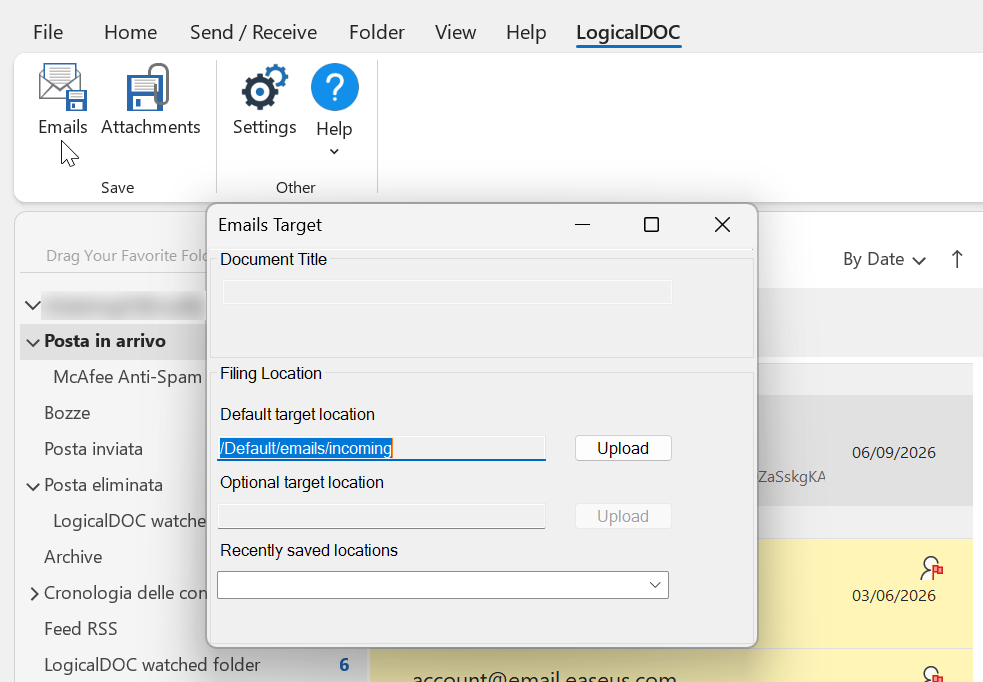
Select the messages you want to archive and click Emails. The Emails Target window allows you to choose where the selected messages will be stored in LogicalDOC.
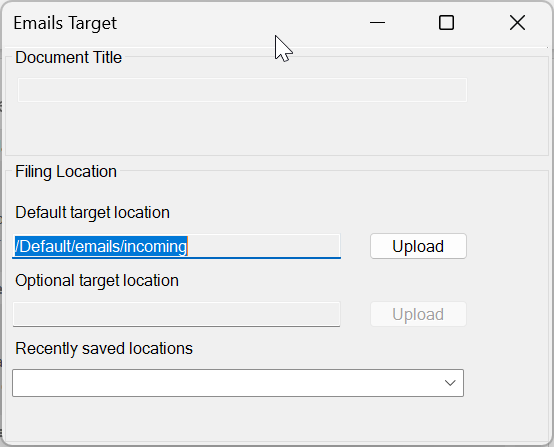
LogicalDOC Outlook Add-in - Emails Target

The window provides the following options:

  • Document Title: allows you to specify the title to use for the document. When automatic title composition is enabled in the add-in configuration, the title is generated according to the configured title schema.
  • Default target location: shows the default LogicalDOC folder configured for storing emails. Click Upload to save the selected messages to this location.
  • Optional target location: allows you to specify a different LogicalDOC folder for the current operation.
  • Recently saved locations: provides quick access to folders that have recently been used as destinations.

The archived email is stored in LogicalDOC as an email document and is automatically associated with the email template. Relevant information from the original message is extracted and stored as extended properties, including:

  • Sender Name: the display name of the sender;
  • From: the sender's email address;
  • Sent Date: the date and time when the message was sent;
  • Subject: the subject of the email;
  • To: the message recipients;
  • Cc: the recipients included in carbon copy;
  • Attachments: indicates whether the original email contains attachments.

These metadata are stored together with the email in the LogicalDOC repository, making archived messages easier to classify, search, and retrieve using the standard LogicalDOC document management features.

The email metadata can also be used to automatically compose the document title. If Enable automatic title composition is enabled in the Outlook Add-in configuration, the title is generated according to the configured Title schema, using placeholders such as {sender}, {from}, {subject}, {date}, and {time}. See Configure Outlook Add-in for details.

Save Attachments

If you only need to archive the files attached to the selected messages, click Attachments in the LogicalDOC toolbar.
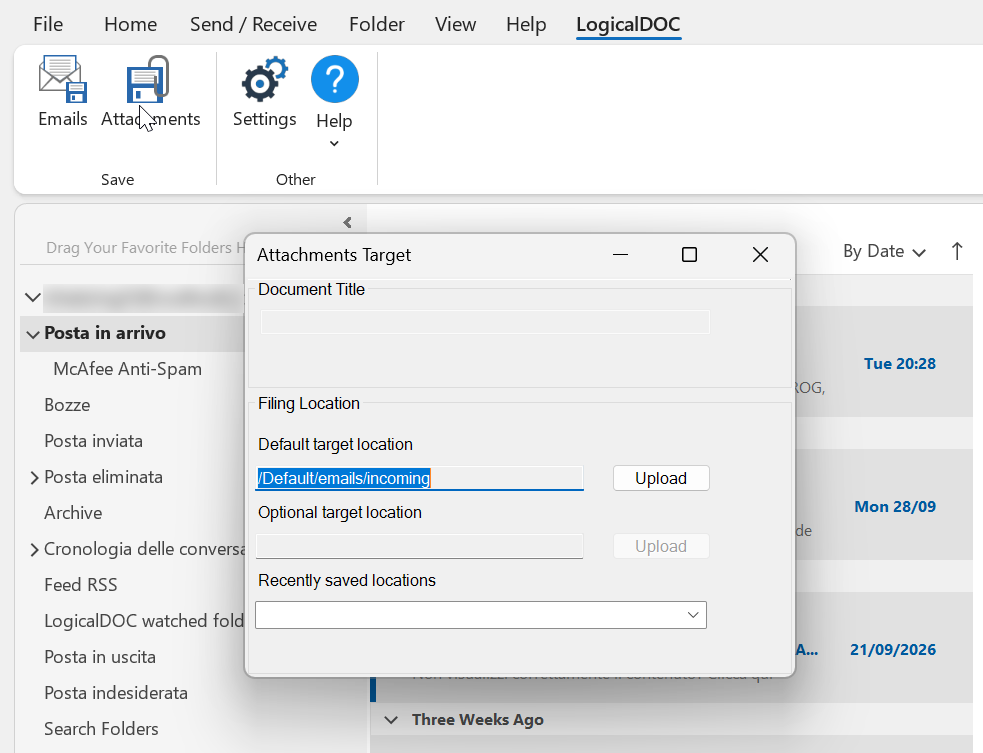
LogicalDOC Outlook Add-in - Attachments Target

The Attachments Target window provides the same filing options available when saving emails. Select the appropriate LogicalDOC destination and click Upload to archive the attachments without saving the email message itself.

Save from the Outlook Context Menu

As an alternative to the commands available in the LogicalDOC toolbar, you can save messages directly from the Outlook context menu.

Right-click a selected email and choose Save to LogicalDOC.
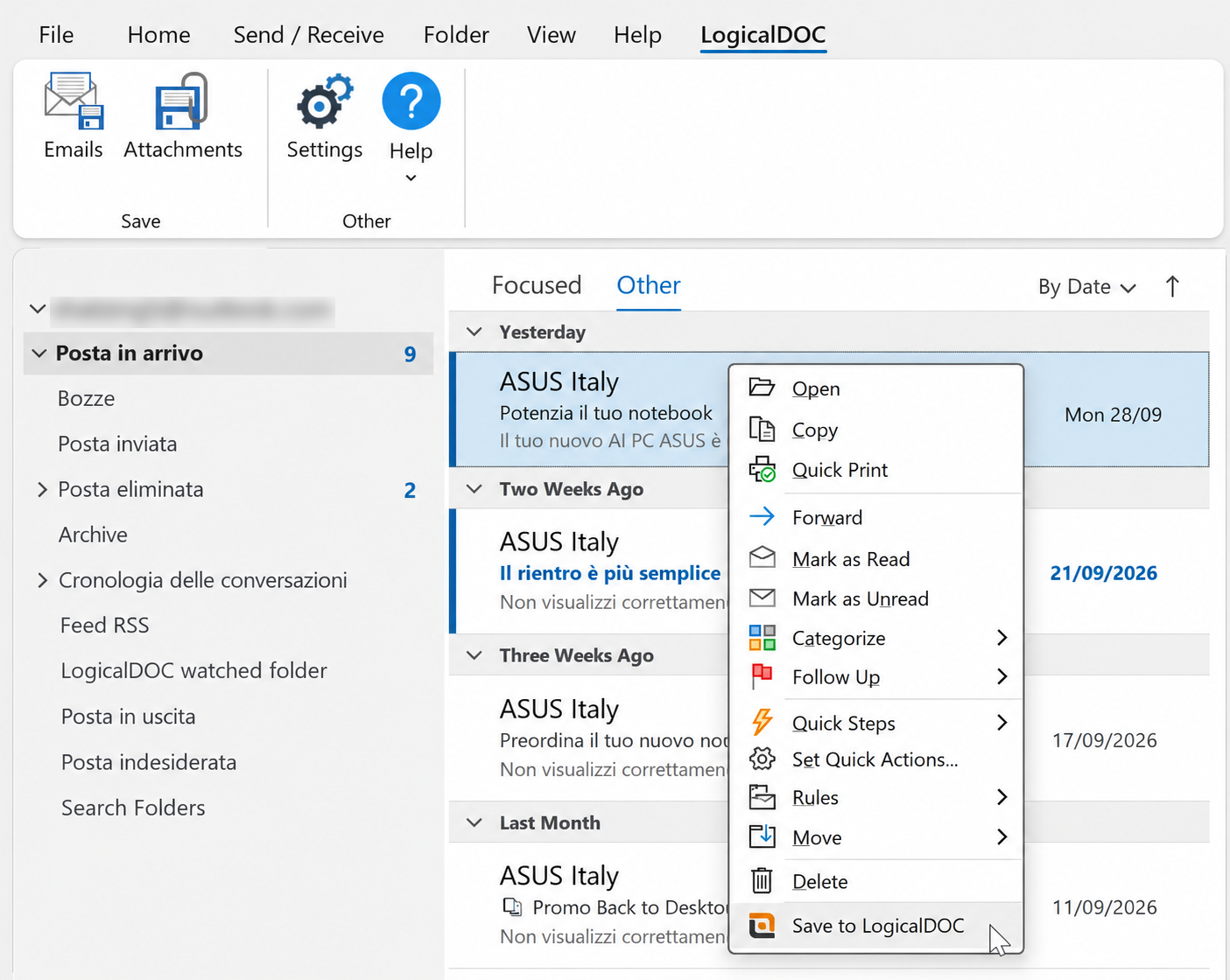
Save to LogicalDOC command in the Outlook context menu

The Save to LogicalDOC window allows you to choose exactly what you want to archive:

  • Email only: archives the selected email message;
  • Attachment(s) only: archives only the files attached to the selected email;
  • Both email and attachment(s): archives both the email message and its attachments.
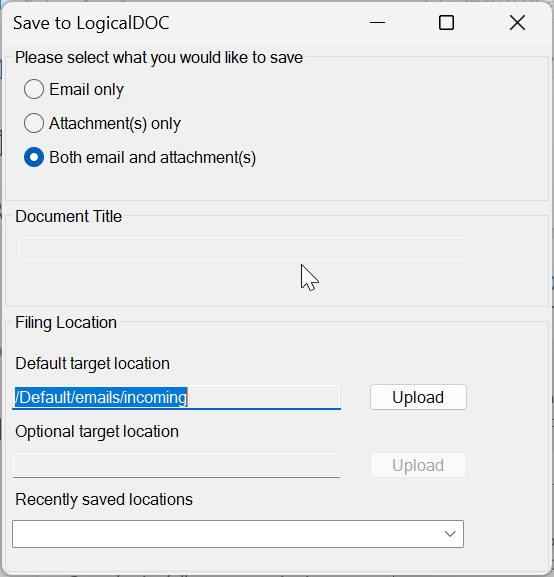
LogicalDOC Outlook Add-in - choose whether to save the email, attachments, or both

After selecting what you want to save, choose the destination folder using the Default target location, an Optional target location, or one of the Recently saved locations, and then click Upload.

Once stored in LogicalDOC, emails and attachments become part of the document repository and can be organized, searched, shared, versioned, secured, and managed using the standard LogicalDOC document management features.

Outgoing Messages

The LogicalDOC Outlook Add-in helps you manage outgoing correspondence without leaving Microsoft Outlook. You can file sent emails and their attachments in LogicalDOC, or attach documents already stored in the LogicalDOC repository to a message you are composing.

Filing Outgoing Emails

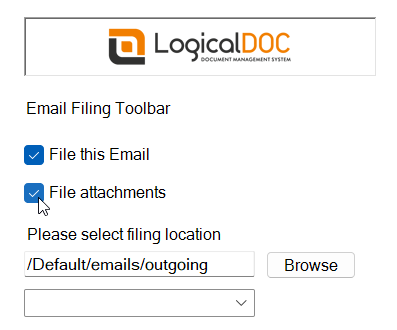
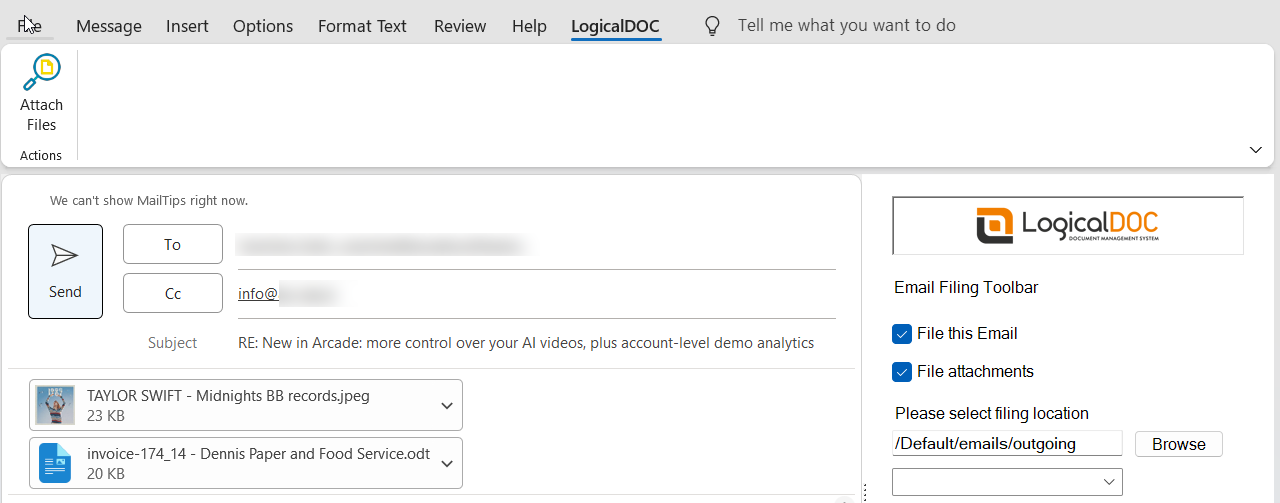
When composing a new email or replying to an existing message, the Email Filing Toolbar appears on the right side of the Outlook window. Use it to choose whether the outgoing message and its attachments should be filed in LogicalDOC.

LogicalDOC Email Filing Toolbar in Outlook showing filing options and destination folder

The toolbar provides the following controls:

  • File this Email: Enable filing of the outgoing email in LogicalDOC when the message is sent.
  • File attachments: Enable filing of the attachments included in the outgoing message.
  • Please select filing location: Review the LogicalDOC destination folder for the outgoing correspondence.
  • Browse: Choose another destination folder in the LogicalDOC repository.

For example, you can organize sent correspondence under /Default/emails/outgoing. Select the appropriate destination before sending the email.

Where email metadata is managed using the LogicalDOC email template, the corresponding message information can be organized and retrieved using those metadata fields. See Import Emails and Attachments for further information about email filing.

Filing Confirmation

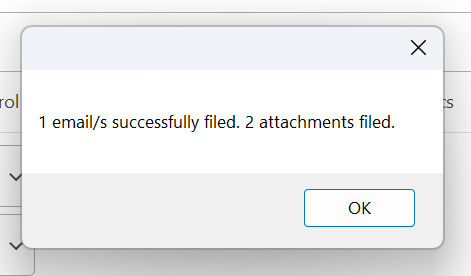
After the filing operation, Outlook displays a confirmation indicating how many email messages and attachments were successfully filed.

Outlook confirmation showing one email and two attachments successfully filed in LogicalDOC

Viewing Filed Emails and Attachments in LogicalDOC

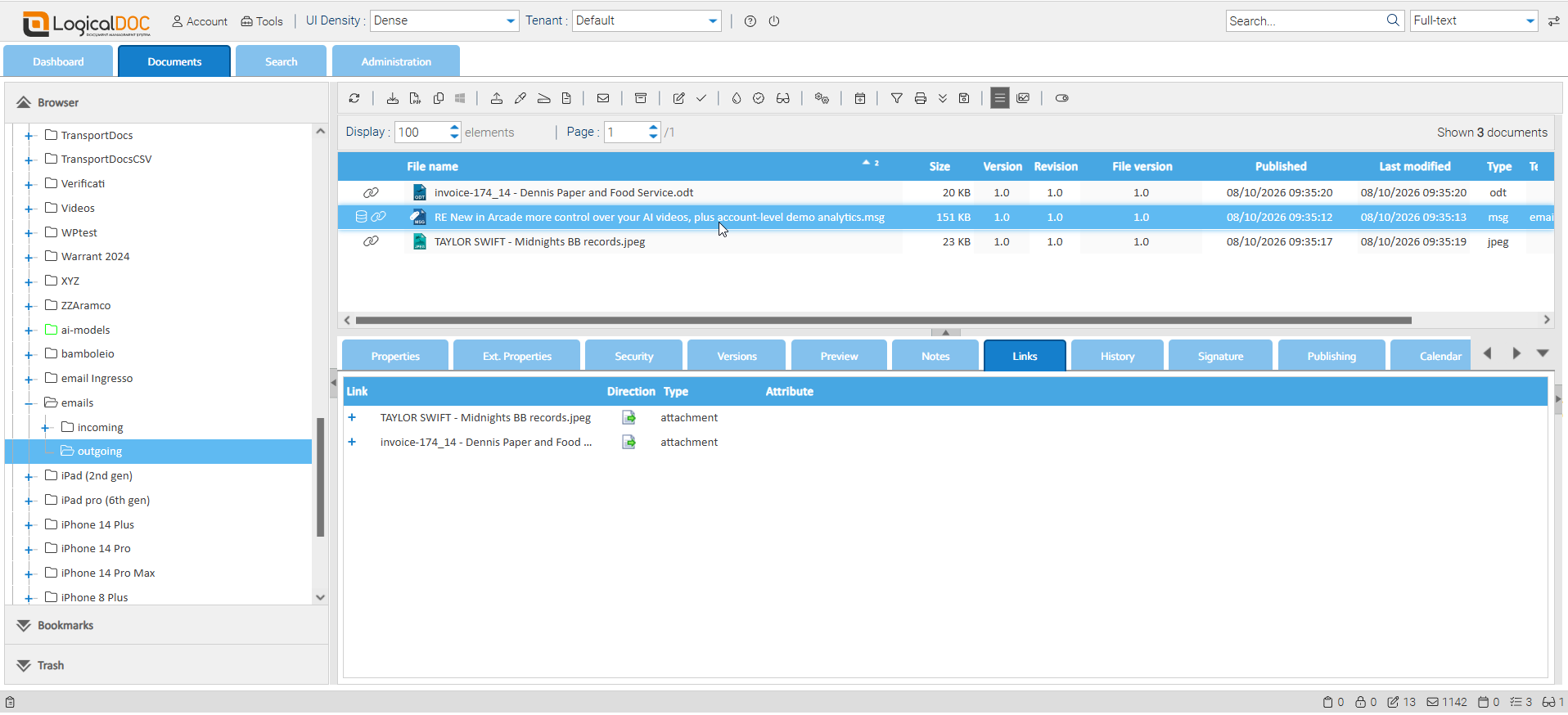
When both File this Email and File attachments are selected, the outgoing email and each of its attachments are stored as separate documents in the same LogicalDOC destination folder.

The message and its attachments remain linked. A chain-link icon beside the filenames indicates these relationships. Select the filed email and open the Links tab to see its associated documents. The related documents can also be downloaded together as a ZIP package.

LogicalDOC outgoing folder containing an email message and two separately filed attachments, with their relationships displayed in the Links tab

Attaching Documents from LogicalDOC

You can also add existing LogicalDOC documents to an outgoing Outlook message, without first downloading them manually to your computer.

  1. Compose a new message or open a reply in Outlook.
  2. Select the LogicalDOC tab in the Outlook ribbon.
  3. Click Attach Files to open the document selection window.
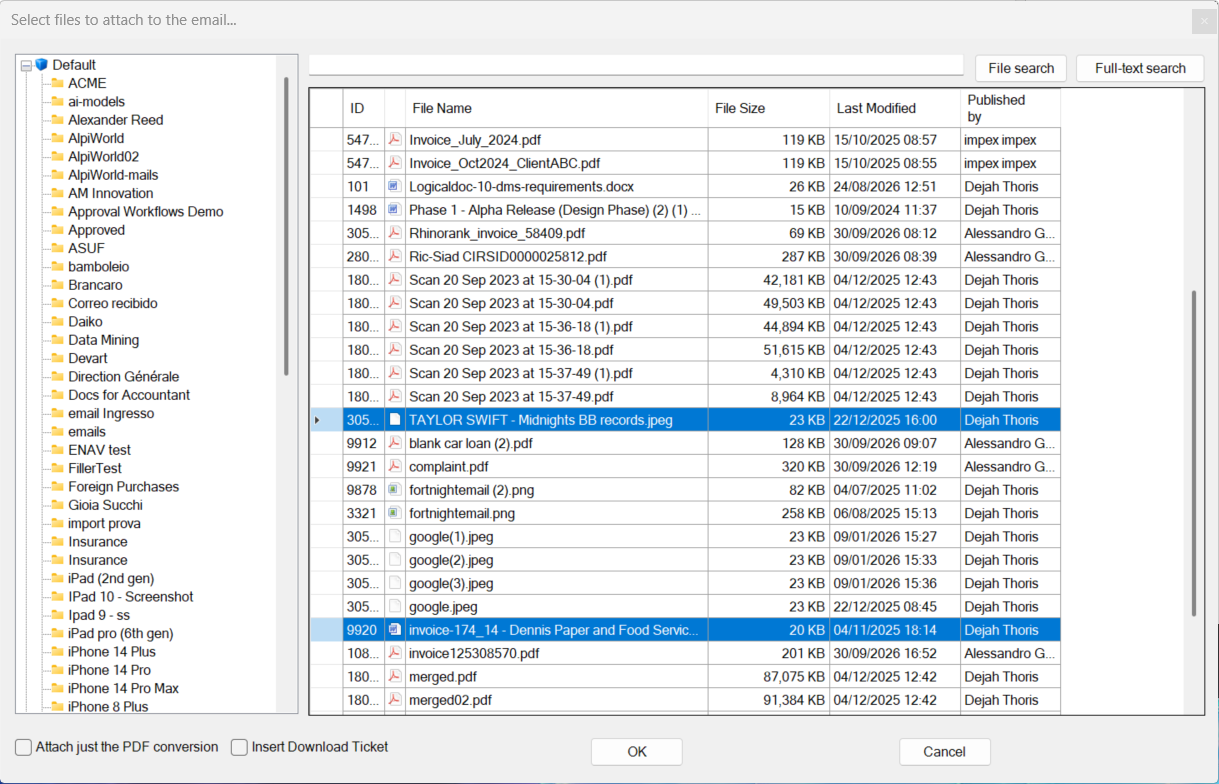
  4. Browse the folder tree or use File search or Full-text search to find the documents you need.
  5. Select one or more documents and choose any relevant attachment options.
  6. Click OK to add the selected documents to the email.

Browsing and Searching for Documents

The selection window shows the LogicalDOC folder tree and a document list with useful information such as file name, file size, last modification date, and publisher. Multiple documents can be selected in the list.

LogicalDOC document selection dialog in Outlook with folder tree, search options and multiple selected documents

Attachment Options

Before confirming the selection, the dialog provides two additional options:

  • Attach just the PDF conversion: Attach the PDF conversion of each selected document instead of its original file. For example, selecting a Word or Excel document attaches its PDF conversion rather than the original Word or Excel file.
  • Insert Download Ticket: Insert a download link (download ticket) into the email message for each selected document, instead of attaching the digital file. Recipients can use the link to download the document.

With neither option selected, the original documents are attached. Choose the appropriate delivery method for your recipients. The behavior when both options are selected is not described here.

Reviewing the Outgoing Message

When documents are attached normally, they appear in the Outlook attachment area. You can then complete the message, verify the recipients and attachments, and send the email.

Outlook outgoing message with two documents from LogicalDOC added as email attachments

If outgoing email filing is enabled in the Email Filing Toolbar, the message can also be filed in the selected LogicalDOC folder when it is sent.

Related Topics